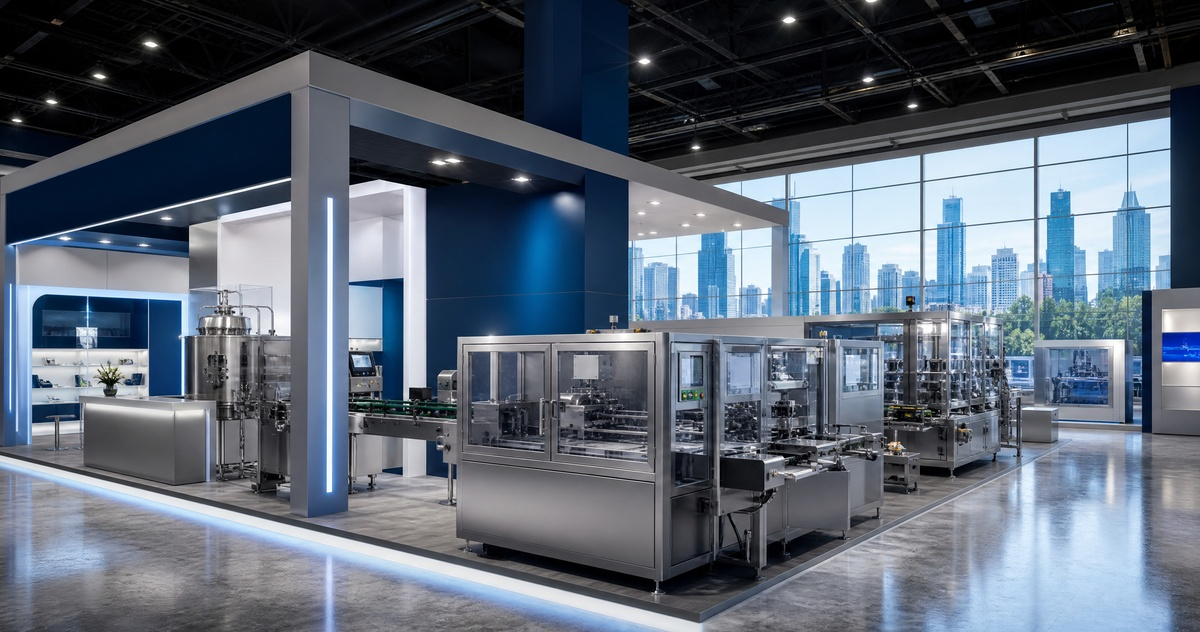
Chicago hosts one of the largest trade shows in North America every two years at McCormick Place, and that scale is exactly what makes finding the right exhibition stand contractor so important. A brand that walks into McCormick Place without a local partner who understands the venue's fire code, official contractor rules and Exhibitor Appointed Contractor paperwork can lose days of setup time before the show even opens.
This guide walks through what actually makes Chicago different from other trade show markets, the practical hurdles a first time exhibitor runs into, and what to look for in a Chicago exhibition stand contractor before signing a contract. It also lays out how PADLOCK CORP manages a project from the first brief to the final teardown, using PACK EXPO International, the largest event McCormick Place hosts, as a working example of how these rules apply in practice.
Why Chicago Is a Major Exhibition Hub
McCormick Place is the largest convention center in North America, and PACK EXPO International alone brings together thousands of exhibitors across more than a million net square feet of floor space every other year. Packaging, processing and automation suppliers from dozens of verticals fill the halls for four days, making it one of the biggest single events any exhibitor is likely to build for in the United States.
That scale is precisely what makes the venue demanding for exhibitors. Because the show's own official service contractor manages electrical, cleaning, plumbing, material handling and rigging for the entire floor, a brand cannot expect the same flexibility it might get in a smaller regional market. Booth diagrams, EAC registration and freight all move through the same tight system, and a Chicago exhibition stand contractor who works in this market regularly already understands where the friction points sit. For a brand exhibiting in Chicago for the first time, that local familiarity often matters more than the design itself.
The Real Challenges of Building a Stand at McCormick Place
Fire Code and Flame Retardancy Certification
Every material used in a booth build, from wall panels to fabric graphics, must be non combustible or flame retardant. Booths with a covered area of 300 square feet or more need additional approval from the venue's own fire safety department, and multi level structures require a deck plan stamped by a licensed structural engineer along with a battery operated smoke detector. Propane and other flammable compressed gas are not permitted anywhere on the show floor. Skipping any of this is one of the fastest ways to have a booth flagged during installation, sometimes late enough in the process that there is no time left to fix it before the show opens.
Booth Height Limits by Square Footage
Height limits at McCormick Place are tied directly to booth size rather than booth type. A small inline space, a mid sized booth and a large island space each carry different maximum heights for walls, graphics and hanging signs. Getting this wrong at the design stage means a costly redesign later, so it is worth confirming the exact tier for a specific booth size before a single wall panel is built. No variances are granted for exceeding the stated limits.
| Booth size | Typical height limit | Note |
|---|---|---|
| Under 599 sq ft | 12 ft (3.66 m) | Hanging signs are not permitted at this tier |
| 600 to 1,499 sq ft | 14 ft (4.27 m) | Includes logos, graphics and hanging signs |
| 1,500 sq ft and above | 18 ft (5.49 m) | Includes logos, graphics and hanging signs |
EAC Registration and Official Contractor Rules
Any outside company brought in to build or supervise a booth, known as an Exhibitor Appointed Contractor or EAC, has to be registered with the show's official service contractor and carry proof of insurance well ahead of move in. Certain tasks, including electrical work, booth cleaning, plumbing, material handling, telecommunications and hanging sign rigging, can only be carried out by the official contractor unless an EAC has been properly registered and approved. Registration typically closes a few weeks before installation begins, and a submission made too close to the show risks being rejected outright.
A missed EAC deadline does not just create a paperwork headache. If an outside crew is not approved in time, venue security will not issue them a wristband at all, which forces a brand to hire the official contractor's own labor at a higher cost and often on a tighter schedule.
What to Look for in a Chicago Exhibition Stand Contractor
Not every exhibition stand builder is equipped to work in a venue with this many moving parts. A few things are worth confirming before signing a contract.
Local regulatory knowledge matters more than a polished portfolio. A contractor who already understands McCormick Place fire safety rules and the official contractor's service boundaries will avoid mistakes that a first time visitor to the market would not catch.
EAC experience is not optional. Ask directly how many times a contractor has registered as an Exhibitor Appointed Contractor at McCormick Place and whether they manage that paperwork themselves or leave it to the client.
Turnkey capability saves time. A contractor who can move from design through production, freight and on site installation under one roof removes several handoff points where delays typically happen.
US based production is a real advantage. A booth engineered and built inside the United States clears customs and freight requirements far more smoothly than one shipped in from overseas at the last minute.
How PADLOCK CORP Manages the Process
PADLOCK CORP runs every Chicago project through the same ten step process, regardless of booth size. Each stage has a clear owner and a clear deliverable, which keeps a project moving even when a show's own deadlines shift.
Brief
Understanding the brand's goals for the show, its target audience on the floor, and the square footage already contracted with the venue.
Design
A 3D concept is developed around that brief, built to match the exact height and sightline rules for the booth type in question.
Budget
A transparent, itemized budget covering production, freight, labor and venue fees, so there are no surprises once the project moves forward.
Approval
The client reviews the design and budget together and signs off before any material is ordered.
Production
Fabrication begins, using materials that already meet fire retardancy requirements rather than sourcing certification after the fact.
Booth Approvals & Ordering
Booth diagrams, EAC registration and any hanging sign or structural engineer submissions are filed with the venue in parallel with production.
Factory Build & Quality Control in Orlando
The stand is fully built and inspected at PADLOCK CORP's own Orlando facility before it ever leaves for the show, which catches fit and finish issues while they are still cheap to fix.
Freight to Show Site
The completed stand ships to the advance warehouse or directly to the venue, timed against the show's own receiving windows.
On Site Installation
A supervised crew, working within union labor rules, installs the stand ahead of the target move in schedule.
Dismantle
After the show closes, the stand is broken down, packed and either returned to storage or shipped onward to its next show.
Brief
Understanding the brand's goals for the show, its target audience on the floor, and the square footage already contracted with the venue.
Design
A 3D concept is developed around that brief, built to match the exact height and sightline rules for the booth type in question.
Budget
A transparent, itemized budget covering production, freight, labor and venue fees, so there are no surprises once the project moves forward.
Approval
The client reviews the design and budget together and signs off before any material is ordered.
Production
Fabrication begins, using materials that already meet fire retardancy requirements rather than sourcing certification after the fact.
Booth Approvals & Ordering
Booth diagrams, EAC registration and any hanging sign or structural engineer submissions are filed with the venue in parallel with production.
Factory Build & QC in Orlando
The stand is fully built and inspected at PADLOCK CORP's own Orlando facility before it ever leaves for the show.
Freight to Show Site
The completed stand ships to the advance warehouse or directly to the venue, timed against the show's own receiving windows.
On Site Installation
A supervised crew, working within union labor rules, installs the stand ahead of the target move in schedule.
Dismantle
After the show closes, the stand is broken down, packed and either shipped onward to its next show.
PACK EXPO International at McCormick Place: A Case Study in Exhibitor Compliance
PACK EXPO International is the largest packaging and processing trade show in the Americas and the biggest single event McCormick Place hosts every two years, which makes it a useful example of how the rules above play out on a real show floor.
Exhibitors at PACK EXPO International face the same square footage based height structure described earlier, with limits stepping up from 12 ft for smaller booths to 18 ft for the largest spaces. Hanging signs are only permitted once a booth reaches the mid size tier, and no exceptions are granted for exceeding the stated limits.
Fire and safety requirements follow the same pattern too. Booths with 300 square feet or more of covered area need review from the venue's fire safety department, multi level structures require a stamped deck plan from a licensed structural engineer, and flammable compressed gas is barred from the entire show floor.
The EAC timeline at PACK EXPO International is a good illustration of why early planning matters. Outside contractors need to be registered with the show's official service contractor several weeks before move in, well before the deadlines for hanging signs, advance freight and booth personnel registration. A brand that leaves this until the last minute risks having its outside crew turned away at the door, regardless of how good the booth design is.
This is exactly the kind of show where a Chicago exhibition stand contractor with existing EAC relationships and a clear internal timeline, like the ten step process above, keeps a brand from losing time to paperwork instead of the show itself.